


Views: 0 Author: Site Editor Publish Time: 2026-06-09 Origin: Site


Modern fluid management goes far beyond basic mechanical transfer. Today, a high-performing industrial pump acts as the beating heart of complex manufacturing systems. It serves as a vital component for ensuring regulatory compliance and maximizing system efficiency. Modern procurement teams no longer just buy bare hardware. Instead, you invest directly in process reliability and energy optimization.
Poor fluid handling causes severe operational bottlenecks. These range from unplanned system downtime to massive, unchecked energy waste. Engineering teams must resolve these issues head-on to maintain profitable operations. This guide explores how facilities evaluate, shortlist, and deploy the precise pumping technology needed today. We detail specific fluid-handling challenges and outline critical performance criteria. You will discover exactly how to match system curves with fluid properties for long-term operational success.
Industrial pumps drive core processes across water treatment, chemical processing, and HVAC, directly impacting facility uptime and energy expenditure.
Selecting the right pump requires matching system curves (flow and pressure) with fluid properties (viscosity, corrosiveness, solids handling).
High-demand applications often require specialized solutions like the SPD Series High Head Multi stage Centrifugal Pump for pressure scaling, while sustainability mandates favor options like the SPS Eco-Friendly Single-stage End Suction Pump.
Successful deployment hinges on evaluating lifecycle costs, mitigating cavitation risks, and ensuring proper alignment during installation.
Industrial facilities lose millions annually due to inadequate fluid management. We often see plants treat pumps as generic commodities rather than engineered solutions. This mindset leads directly to catastrophic operational bottlenecks. When a pump fails, the entire production line stops. Unplanned downtime destroys production schedules and inflates labor expenses. Furthermore, inefficient pumps consume vast amounts of electricity. High energy consumption rapidly depletes operational budgets. Seal leaks present another severe bottleneck. Leaking fluids cause environmental contamination. They trigger costly regulatory fines and compliance audits.
You must clearly define what successful pump deployment looks like. Facilities no longer measure success merely by whether fluid moves from point A to point B. Instead, modern success criteria involve strict performance metrics.
Target Mean Time Between Failures (MTBF): Extending the operational hours before maintenance becomes necessary.
Stable Flow Rates: Maintaining consistent output even when system loads vary unpredictably.
Energy Efficiency: Significantly reducing the kW/hr consumed per pumped gallon.
Leak Prevention: Achieving zero-leakage operation to ensure environmental safety.
Today’s applications demand much more from pumping equipment. You must handle increasingly aggressive fluids. Chemical concentrations are higher. Operating temperatures push the physical limits of standard metallurgy. Stricter environmental emissions standards apply universally. Equipment must meet these rigorous demands without sacrificing hydraulic performance. Modern pump engineering directly addresses these exact bottlenecks. It transforms vulnerable fluid transfer points into highly reliable system assets.
Selecting the correct technology requires deep alignment with your specific application. You cannot force a single pump type to handle every operational scenario. Engineering teams map specific fluid criteria to established solution categories. We break these down into three primary industrial use cases.
Certain processes require overcoming massive system resistance. Boiler feed systems, reverse osmosis plants, and pressure-washing arrays demand immense force. Single-stage units struggle to generate this necessary pressure. This is where multi-stage designs excel. They utilize multiple impellers stacked along a single shaft. Each impeller compounds the pressure generated by the previous one.
Facilities frequently deploy the SPD Series High Head Multi stage Centrifugal Pump for these rigorous tasks. It delivers reliable pressure compounding without requiring a massive physical footprint. You gain exceptional head pressure while conserving valuable floor space. This makes it an ideal solution for retrofitting older plants.
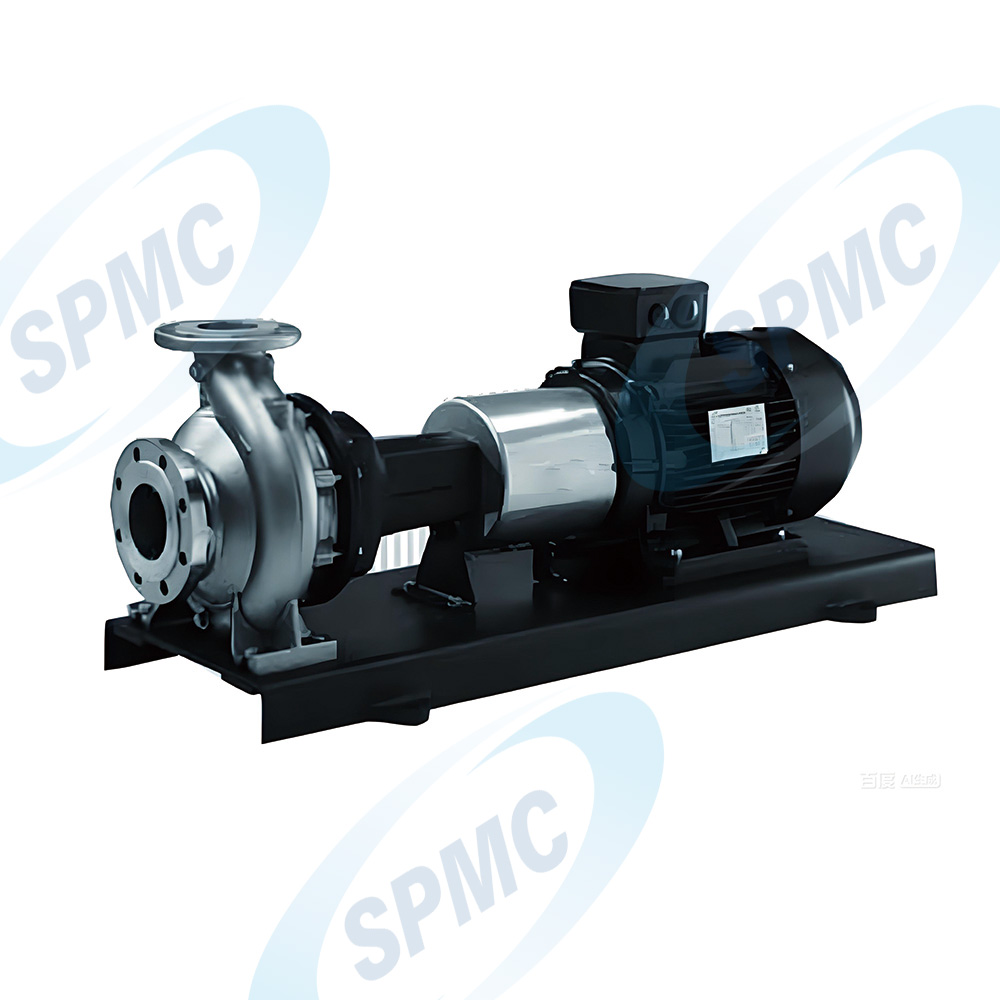
Many facilities need to move large volumes of relatively clean fluid efficiently. We see this primarily in HVAC systems, cooling towers, and municipal water transfer networks. These applications prioritize continuous, uninterrupted operation over extreme pressure. Single-stage centrifugal units dominate this category.
For operations prioritizing sustainability, the SPS Eco-Friendly Single-stage End Suction Pump serves as a premier solution. It features optimized hydraulic pathways. This design severely reduces internal turbulence. It lowers energy consumption during continuous duty cycles. Facilities achieve their required volume transfer while keeping utility expenses heavily minimized.
Centrifugal pumps work perfectly for water-like liquids. However, they struggle heavily with thick, highly viscous fluids. Heavy oils, syrups, and sensitive food products require a different approach. Positive displacement pumps fill this critical gap. They move a fixed volume of fluid per revolution. Unlike centrifugal designs, their flow remains constant regardless of system pressure. They gently handle shear-sensitive liquids without altering the product's physical structure.
Pump Selection Overview Chart
Pump Category | Primary Application | Key Advantage | Fluid Type Match |
|---|---|---|---|
Multi-Stage Centrifugal | Boiler feed, high-pressure washing | Compounds pressure efficiently | Clean, low-viscosity fluids |
Single-Stage Centrifugal | HVAC, cooling towers, water transfer | High volume, energy efficient | Clean, low-viscosity fluids |
Positive Displacement | Food processing, heavy oils | Fixed volume per revolution | Thick, shear-sensitive fluids |
Procurement teams must evaluate several technical dimensions before issuing a purchase order. Relying solely on superficial specifications leads to premature equipment failure. You need a rigorous, evidence-based evaluation process.
You must evaluate a pump's performance curve against your facility's system curve. Operating off the Best Efficiency Point (BEP) causes severe mechanical stress. It induces heavy vibration and drastically shortens bearing life. Furthermore, you must understand Net Positive Suction Head (NPSH). The system's NPSH Available (NPSHa) must always exceed the pump's NPSH Required (NPSHr). If it does not, the fluid will vaporize. This causes cavitation, which physically tears metal away from the impeller. Calculating NPSHa accurately is a non-negotiable best practice.
Buyers often focus entirely on the initial capital cost. This is a common procurement mistake. The purchase price typically represents only 10% to 15% of the equipment's total lifetime expenditure. Energy consumption dominates the financial breakdown. Maintenance, repairs, and replacement parts make up the rest. An inherently cheap pump with poor hydraulic efficiency will cost you exponentially more over a ten-year lifespan. You must evaluate the long-term energy draw and the projected maintenance intervals.
The fluid's chemical makeup dictates your metallurgy choices. Cast iron works perfectly well for standard municipal water. However, it corrodes instantly when exposed to harsh acids. Stainless steel provides excellent general chemical resistance. For highly aggressive or abrasive environments, you may need exotic alloys like titanium or Hastelloy. Mechanical seals require equal attention. You must configure seal faces and elastomers based on chemical exposure. Proper seal selection prevents particulate matter from destroying the seal faces.
Modern eco-friendly designs help facilities meet strict ESG (Environmental, Social, and Governance) targets. Local environmental regulations demand lower emissions and reduced energy usage. Upgrading to optimized hydraulic designs helps you stay compliant. It demonstrates a corporate commitment to sustainable manufacturing practices.
Procuring excellent equipment solves only half the problem. Poor installation destroys perfectly engineered machinery. You must navigate several rollout risks to ensure long-term reliability.
Real-world failures rarely stem from manufacturing defects. They usually result from installation pitfalls. Pipe strain represents a massive risk. If technicians force misaligned pipes to connect to the pump flanges, the casing twists. This twisting binds the internal rotating assembly. Soft foot occurs when the equipment does not sit flat on its baseplate. Tightening the hold-down bolts distorts the frame. Improper shaft alignment between the motor and the pump creates severe radial loads. This destroys bearings and shatters mechanical seals within weeks.
The initial startup phase holds immense danger for rotating equipment. Operators must follow strict commissioning protocols.
Verify System Priming: Never start a centrifugal unit dry. Dry running melts mechanical seal faces in seconds.
Check Valve Positions: Ensure discharge valves are partially open. Deadheading the pump causes the trapped fluid to boil quickly.
Monitor Suction Pressure: Watch for sudden pressure drops during startup to prevent initial cavitation.
Verify Rotation Direction: Running the motor backward loosens impeller nuts and destroys hydraulic efficiency.
Facilities often ignore the physical space required for future maintenance. Installing equipment in cramped corners guarantees poor maintenance execution. Technicians need room to safely pull heavy components. Modern back-pull-out designs offer a great advantage here. They allow mechanics to remove the motor and rotating assembly without disturbing the main pipework. You must plan the maintenance footprint before pouring the concrete pad.
Moving from technical evaluation to actual procurement requires a structured approach. You need precise data to communicate effectively with vendors.
Never contact a vendor with vague requirements. You must build a comprehensive specification sheet first. Determine the exact required flow rate in gallons per minute (GPM) or cubic meters per hour. Calculate the Total Dynamic Head (TDH) accurately, factoring in all pipe friction losses. Note the fluid's specific gravity and viscosity. Record the maximum and minimum operating temperatures. Finally, confirm your site's electrical voltage and frequency requirements. This data forms the foundation of a successful equipment match.
Assess potential suppliers beyond their product catalogs. Ask about their local parts availability. A great pump is useless if replacement seals take twelve weeks to arrive. Look for recognized testing certifications. ISO standards and API compliance demonstrate rigorous manufacturing quality. Furthermore, evaluate their post-sale engineering support. Strong vendors supply application engineers who assist with complex commissioning challenges.
Your immediate next step is initiating a comprehensive fluid system audit. Walk your facility and document existing bottlenecks. Alternatively, consult directly with an application engineer. They will help validate your selected pump category against actual site conditions. This external validation prevents costly specification errors before you issue a purchase order.
An industrial pump remains a critical process asset requiring rigorous, evidence-based selection. You cannot treat fluid dynamics as an afterthought. From managing harsh chemical transfers to supporting massive HVAC networks, the right technology ensures facility uptime. It protects your bottom line against unchecked energy usage and costly regulatory fines.
Balancing initial performance requirements with long-term reliability is the key to a successful investment. You must look past the sticker price. Focus heavily on hydraulic efficiency, proper metallurgy, and professional installation standards. Mitigating installation risks like pipe strain and misalignment guarantees your equipment meets its projected lifecycle.
We encourage you to review your current technical specifications immediately. Compare your existing system curves against modern equipment capabilities. Request a technical consultation to explore how the SPD or SPS series can optimize your specific operations today.
A: A single-stage unit uses one impeller to move fluid. It excels at delivering high volumes efficiently at lower pressures. A multi-stage unit uses several impellers stacked together. As fluid passes through each impeller, the pressure compounds. Multi-stage designs generate massive head pressure, making them ideal for boiler feeds and washdown systems.
A: You must combine four primary expenses. Start with the initial capital cost of the equipment. Add the installation and commissioning labor expenses. Next, calculate the lifetime energy consumption based on motor efficiency and operating hours. Finally, project the routine maintenance costs, including replacement seals, bearings, and scheduled downtime labor.
A: Premature failure typically results from poor operational practices or bad installation. Operating the unit too far from its Best Efficiency Point causes extreme vibration. Cavitation destroys impellers when suction pressure falls too low. Additionally, pipe strain, soft foot, and shaft misalignment physically tear bearings and mechanical seals apart.
A: Eco-friendly designs feature highly optimized hydraulic pathways that reduce internal fluid turbulence. This drastically lowers the electrical energy required to move the fluid. Choosing these models reduces your monthly utility expenses. Furthermore, it helps your facility comply with strict local environmental regulations and achieve corporate sustainability targets.


