


Views: 0 Author: Site Editor Publish Time: 2026-06-16 Origin: Site


Selecting an industrial pump represents a high-stakes operational decision for any processing facility. Mismatched equipment routinely leads to premature failure, excessive energy consumption, and highly disruptive unplanned downtime. Many procurement teams focus solely on basic catalog specifications but neglect the nuanced technical realities of actual pump deployment. Finding the right industrial pump requires carefully balancing complex fluid dynamics with long-term operational reliability. You cannot simply guess or default to the cheapest option on the market. This article provides an evidence-based evaluation framework designed for modern facilities. We will help your engineering and procurement teams shortcut the selection process effectively. You will learn exactly how to shortlist the specific pump architecture required for your unique fluid handling needs. By comprehensively evaluating fluid characteristics, pressure constraints, and maintenance profiles, you can guarantee a highly reliable deployment.
Industrial pump selection hinges on a precise evaluation of fluid viscosity, required flow rate, and system head pressure.
Centrifugal pumps dominate high-volume, low-viscosity applications, while positive displacement (PD) pumps are essential for high-viscosity or shear-sensitive fluids.
Evaluating sub-categories—such as single-stage vs. multi-stage centrifugal systems—requires matching the pump’s performance curve against long-term maintenance and efficiency metrics.
System longevity depends heavily on mitigating implementation risks like cavitation (NPSH margins) and improper material selection.
Evaluating an industrial pump starts with your exact process conditions. You should never begin by blindly browsing an equipment catalog. Fluid characteristics dictate your entire selection process from the ground up. Viscosity, specific gravity, temperature profiles, and particulate content strictly limit feasible pump technologies. For example, highly viscous fluids create massive internal friction. This renders many standard centrifugal pumps practically useless. Specific gravity directly impacts your motor horsepower requirements. Pumping a heavy fluid demands a significantly larger motor to prevent dangerous overheating.
You must map out your precise system requirements comprehensively. Understand the critical, non-negotiable relationship between Flow Rate (Capacity) and Total Dynamic Head (Pressure). These two metrics form the mathematical backbone of your system curve. Flow rate dictates production speed. Total Dynamic Head represents the total resistance your pump must overcome. A successful deployment maximizes hydraulic efficiency consistently over thousands of hours. It also maintains an acceptable mean time between failures (MTBF). If you ignore actual process realities, your MTBF plummets quickly. Premature wear destroys internal components rapidly. You must treat fluid dynamics as the governing law of your facility.
We can contrast the two primary industrial pump architectures using an objective, technical lens. Most industrial facilities eventually choose between centrifugal and positive displacement (PD) pumps. Understanding their fundamental mechanisms prevents costly misapplications.
Centrifugal pumps rely entirely on kinetic energy to move fluid. Spinning impellers accelerate the liquid outward into a volute casing or diffuser. This physical geometry converts high velocity into stable discharge pressure. They represent the best fit for high flow, low pressure, and low viscosity workloads. Think of municipal water, light chemicals, or cooling fluids. However, they carry specific performance trade-offs. Efficiency drops significantly if fluid viscosity increases beyond basic water-like consistency. They also struggle heavily if you operate them outside their Best Efficiency Point (BEP). Operating off the BEP causes internal recirculation, severe vibration, and shortened bearing life.
Positive displacement (PD) pumps operate on a completely different mechanical principle. They physically trap and force a fixed, unyielding volume of fluid through the discharge port with every rotation. This fundamental mechanism makes them the absolute best fit for high viscosity fluids like resins, heavy oils, or syrups. They handle variable pressure conditions effortlessly and offer highly precise metering capabilities. The primary trade-off involves mechanical complexity. They generally require higher upfront capital, complex relief valve systems, and more intensive maintenance routines compared to their centrifugal counterparts.
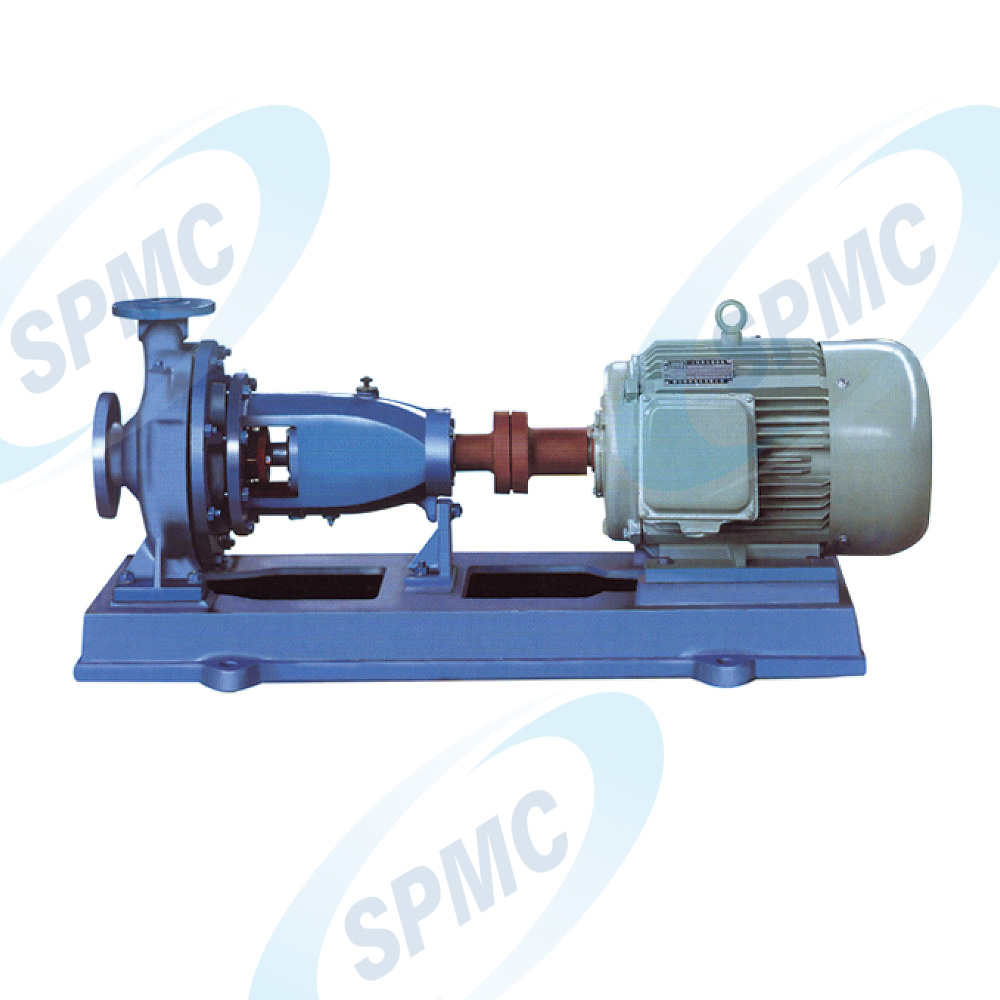
Let us break down the centrifugal category further. You must base your architectural choice on application scale and actual maintenance realities on your factory floor. Centrifugal pumps generally fall into two structural categories.
Single-stage systems utilize a single spinning impeller. They are fundamentally ideal for high flow rates at low-to-moderate total head. Your evaluation standard should actively prioritize standard dimensions. Look for modular parts and simple back-pull-out designs to minimize operational downtime. For example, deploying an IS Series Easy-Maintain Single-stage End Suction Pump works perfectly for high-capacity general water supply. You might also use it in demanding HVAC cooling loops where continuous circulation is required. In these common scenarios, ease of service and predictable mechanical reliability remain paramount. Technicians can service the rotating assembly without disturbing the main suction or discharge piping.
Multi-stage systems feature multiple impellers arranged sequentially in series. They exponentially increase discharge pressure with each successive stage. Crucially, they achieve this massive pressure boost without requiring massive motor footprints or oversized single impellers. When evaluating these complex systems, assess shaft stability rigorously. Bearing life under intense high-pressure loads is another crucial evaluation standard. You must ensure the manufacturer balances axial thrust effectively. Consider utilizing an SPD Series High-Head Multi-stage Centrifugal Pump for demanding, heavy-duty process tasks. Common critical applications include boiler feed water injection, industrial reverse osmosis filtration, or high-elevation fluid transfer. Standard single-stage units simply fail to overcome the intense system resistance found in these demanding environments.
Procurement and engineering teams must connect technical features to tangible operational outcomes. Selecting raw specifications is never enough to ensure success.
First, examine hydraulic coverage thoroughly. Map the specific pump curve directly to your facility's system curve. This exact mathematical overlap ensures your equipment operates near its BEP. Operating at BEP minimizes destructive vibration and maximizes energy conversion. Second, scrutinize material compatibility closely. Select metallurgy based on specific localized corrosion and physical abrasion risks. Common heavy-duty options include cast iron for benign fluids, standard stainless steel for mild corrosives, and specialized duplex alloys for harsh chemical slurries.
Scalability and energy efficiency represent another vital operational dimension. Evaluate motor efficiency ratings carefully before signing off. Check for seamless compatibility with Variable Frequency Drives (VFDs). VFDs help the pumping system adapt to fluctuating daily demand seamlessly. By slowing the motor down during low-demand periods, VFDs actively reduce power consumption over time. This highly strategic approach aligns seamlessly with modern industrial sustainability standards.
Finally, assess regulatory compliance and facility safety protocols. Strict environmental regulations often dictate unyielding rules regarding hazardous or volatile fluid leakage. Review seal technologies comprehensively to ensure total compliance. You might choose standard mechanical seals for benign liquids. Alternatively, magnetic drive configurations eliminate dynamic seal leaks entirely. These specialized pumps are essential for highly dangerous, toxic, or flammable chemicals.
Evaluation Dimension | Key Metric / Feature | Operational Outcome |
|---|---|---|
Hydraulic Coverage | Pump Curve vs. System Curve overlap | Operation near Best Efficiency Point (BEP) |
Material Selection | Metallurgy (Cast Iron, Stainless, Duplex) | Maximum resistance to corrosion and physical abrasion |
Energy Efficiency | VFD Compatibility & Motor Ratings | Reduced power draw during variable plant demand |
Safety & Compliance | Seal Technology (Mechanical vs. Mag-Drive) | Prevention of hazardous or volatile fluid leakage |
Many common deployment failures happen purely due to poor upfront planning. You can proactively design these critical risks out of your system before concrete is ever poured.
Net Positive Suction Head (NPSH) remains a critical, non-negotiable calculation. You must verify NPSHa (available at the site) against NPSHr (required by the pump). If NPSHa drops too low due to friction or vapor pressure, cavitation occurs rapidly. Cavitation involves the rapid formation and violent collapse of vapor bubbles inside the liquid. These collapsing bubbles cause severe impeller degradation, extreme vibration, and catastrophic mechanical failure.
Pay close attention to the installation footprint and structural alignment. Pipe strain often ruins otherwise perfect installations. Heavy, unsupported pipes pull the pump casing entirely out of alignment. Baseplate rigidity prevents unwanted foundational vibrations. Proper laser shaft alignment stops premature bearing failure and catastrophic seal wear. You simply cannot rush the installation phase without compromising longevity.
Consider the physical maintenance footprint carefully as well. Factor in adequate spatial clearance for regular maintenance routines. Technicians need physical room for seal replacements. They must execute lubrication schedules safely without squeezing past dangerously hot pipes. Checking wear-ring clearances also demands highly accessible floor space around the equipment.
Calculate NPSH margins accurately to avoid destructive cavitation.
Ensure rigid baseplates and execute precise laser shaft alignment.
Eliminate destructive pipe strain entirely during the installation phase.
Leave generous physical space for future seal and bearing maintenance.
You need a structured, data-driven approach for all vendor discussions. Consolidate your operational data first. Provide a comprehensive checklist of required data points to potential suppliers. Vague requests always yield useless quotes.
Precise fluid type and detailed chemical composition.
Dynamic viscosity calculated at normal operating temperatures.
Target flow rate under standard facility conditions.
Total Dynamic Head (TDH) calculations based on pipe friction.
Suction side conditions, specifically focusing on NPSHa.
Evaluate potential manufacturers strictly based on support capabilities. Do not judge them solely on upfront capital cost. Assess them based on localized parts availability in your specific region. Verify their independent testing certifications thoroughly. Look for standard hydrostatic testing and fully documented performance testing. Fast technical support keeps your plant running during unexpected emergencies. A remarkably cheap pump becomes disastrously expensive if spare parts take six weeks to arrive.
Your immediate next-step action involves dynamic simulation. Engage a qualified applications engineer promptly. Ask them to run specific pump curve simulations for your project. They should base these exact simulations on your facility's real-world piping schematics, including all elbows, valves, and elevation changes. This strategy completely removes dangerous guesswork from the procurement pipeline.
Selecting an industrial pump functions as an ongoing exercise in mitigating operational risk. You must actively optimize long-term mechanical stability. We strongly encourage modern decision-makers to prioritize precise hydraulic fit over simple brand legacy. Ensure physical maintenance accessibility ranks significantly higher than the initial purchase price. Avoid rushed, price-focused evaluations, as they inevitably lead to chronic system failures. Partner with experienced fluid dynamics engineers who truly understand your unique system constraints. A mathematically sound, well-selected pump guarantees decades of safe, efficient, and uninterrupted fluid transfer.
A: A single-stage pump uses one impeller to move fluid. It excels in high-flow, low-pressure applications like standard water transfer. A multi-stage pump uses several impellers arranged in series. This exponentially increases the discharge pressure. Facilities typically use multi-stage systems for demanding, high-pressure tasks like boiler feed or reverse osmosis.
A: You size a pump by calculating the required flow rate and Total Dynamic Head (TDH). TDH accounts for elevation changes, operating pressure, and fluid friction losses inside your piping network. You then map this specific data against manufacturer pump curves to find a unit that operates highly efficiently.
A: Efficiency losses usually stem from internal mechanical wear. Increased wear-ring clearances allow pumped fluid to recirculate internally. Impeller degradation from cavitation or physical abrasion also dramatically reduces performance. Additionally, if your system demand changes, operating the pump off its original design curve causes severe efficiency drops.
A: Packing is cheaper upfront but requires regular manual adjustments. It inherently leaks a small amount of fluid to maintain necessary lubrication. Mechanical seals cost more initially but prevent fluid leakage entirely. They demand highly precise alignment and clean fluids, as particulate matter can quickly destroy the delicate seal faces.


