


Views: 0 Author: Site Editor Publish Time: 2026-05-18 Origin: Site


Modern industrial facilities rely on a control cabinet to serve as the central nervous system of their automation infrastructure. It silently orchestrates complex machine movements while actively managing heavy electrical power distribution. However, treating this vital asset as merely a metal box introduces severe operational risks. An improperly specified enclosure frequently leads to catastrophic thermal failures. It also triggers compliance violations and costly, unplanned production downtime. Protecting sensitive internal automation components from harsh external environments remains a top priority. Simultaneously, the design must ensure safe, continuous system operation for plant personnel. Evaluating these electrical systems requires looking past the rugged exterior. We must deeply understand internal component layout, advanced thermal management, and strict regulatory compliance. In this guide, you will learn how engineers isolate high-voltage power from sensitive logic. We will also explore material selection matrices and safety standards to help you procure the ideal solution for your facility.
Semantic clarity: A "control panel" is the surface containing operational components; a "control cabinet" is the physical enclosure protecting them.
Operational logic: Functionality relies on isolating high-voltage power distribution from low-voltage automation signals (typically 24V DC).
Environmental protection: Specification requires matching enclosure materials (coated steel, stainless, aluminum) to exact NEMA/IP ratings and environmental hazards.
Compliance is mandatory: Procuring a safe-reliable auto control cabinet requires adhering to global and regional standards like UL 508A, IEC 61439, or ATEX.
Industry professionals frequently interchange the terms "control panel" and "control cabinet." However, they represent distinct physical elements. Linguistic confusion often creates costly miscommunications during the procurement phase. We must define these terms clearly.
A control panel refers to the flat surface or backplate. Engineers mount switches, relays, and programmable logic controllers (PLCs) directly onto this surface. You might also find an operator interface (HMI) mounted on the panel door. It serves as the interaction layer.
Conversely, the control cabinet is the complete physical enclosure. Think of it as a protective vertical room or cabin. It houses and shields multiple internal panels. It protects these vulnerable components from dust, moisture, and extreme external elements.
Manufacturers categorize these enclosures based on application complexity. Understanding your facility's exact needs helps you choose the right variation.
Basic electrical cabinets: These units focus heavily on power distribution. They house circuit breakers and transformers.
Industrial automation cabinets: These systems integrate PLCs and complex logic controllers. They manage advanced manufacturing processes.
Motor Control Centers (MCC): These specialized enclosures house Variable Frequency Drives (VFDs) and motor starters. They manage heavy industrial motors.
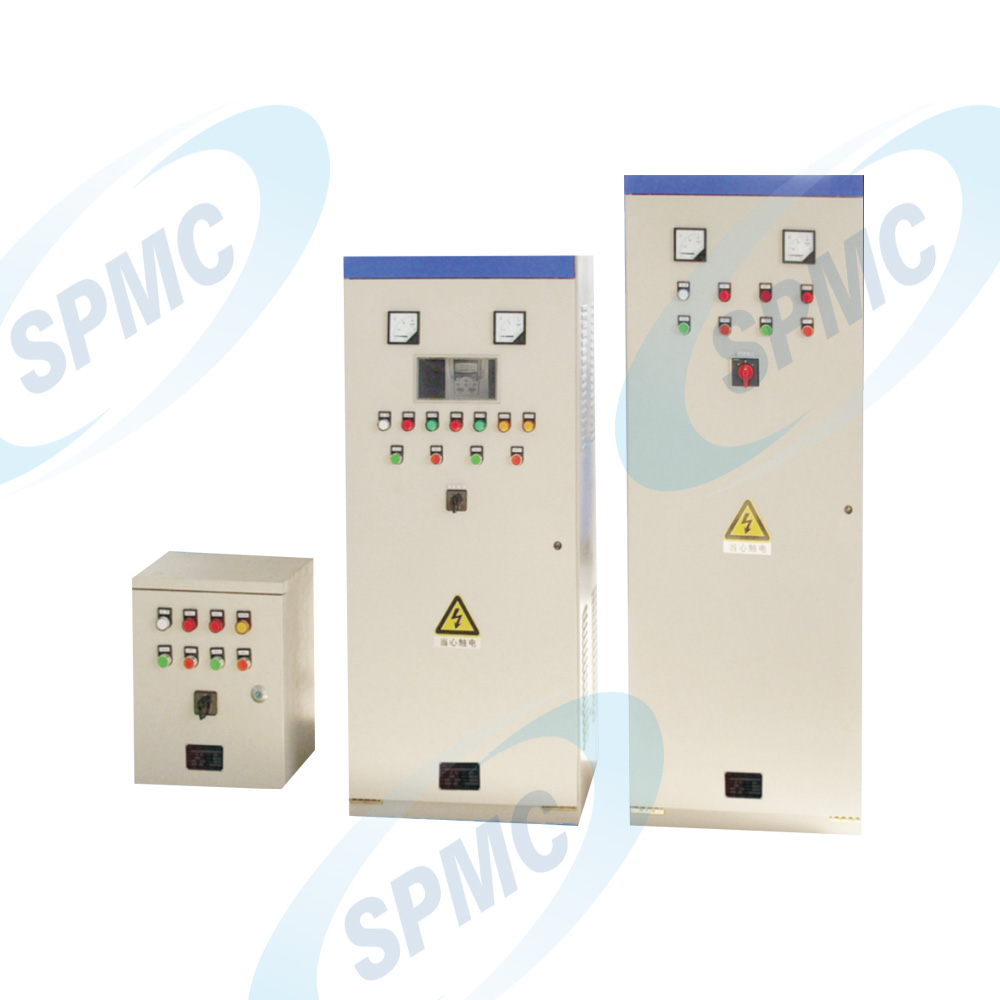
A well-engineered cabinet functions as a highly integrated ecosystem. It relies on four primary component subsystems working in perfect harmony. If one subsystem fails, the entire automation process stops.
Power management remains the foundation of any industrial enclosure. It dictates both operational capacity and human safety.
Main disconnect switches: These provide immediate, emergency power isolation. Operators use them to safely shut down the system.
Transformers and power supplies: They drop dangerous 480V or 120V AC feeds down to a safe 24V DC. Internal logic processing requires this stable, low-voltage power.
Circuit breakers and fuses: These devices mitigate short circuits and overloads. They prevent localized electrical faults from causing factory-wide fires.
This subsystem acts as the intelligent brain of the operation. It processes incoming data and dictates outgoing physical actions.
PLCs (Programmable Logic Controllers): These serve as the primary decision-makers. They run sequential logic programs to control machinery.
Motor drives and servo controllers: These components dictate the precise speed and position of external motors. Inverters belong in this category too.
Protection relays: These intelligent switches monitor the electrical grid. They isolate specific faults without triggering a system-wide shutdown.
Information must flow smoothly between the factory floor and the central processing unit. Connectivity components manage this data traffic.
Terminal blocks: Builders position these at the base of the enclosure. They provide organized connection points for field-instrument wiring.
Industrial Ethernet switches: Modern automation relies heavily on network communication. These modules connect the local PLC to plant-wide SCADA systems.
Electronic components generate substantial heat. Active climate control prevents premature hardware failure.
Cooling components: High-density enclosures utilize cooling fans, heat exchangers, or internal air conditioning units. They manage the heavy thermal loads generated by VFDs and transformers.
Engineering a cabinet requires much more than simply bolting parts to a metal backplate. Spatial planning dictates both safety and system reliability. Layout directly influences electromagnetic interference (EMI) and thermal dynamics.
Industry best practices demand the strict physical separation of power types. Engineers must isolate high-voltage AC components from highly sensitive 24V DC control zones. You will typically see this separation structured horizontally (left/right) or vertically (top/bottom). This physical distance prevents high-power magnetic fields from corrupting low-voltage data signals.
Chart: Signal Flow Layout Strategy | |||
Zone | Location Strategy | Component Types | Primary Hazard |
|---|---|---|---|
High-Voltage AC | Top / Left Side | Main disconnects, large VFDs, transformers | Arc-flash, extreme heat generation |
Low-Voltage DC | Bottom / Right Side | PLCs, safety relays, I/O modules | Electromagnetic Interference (EMI) |
Field Wiring | Absolute Bottom | Terminal blocks, grounding bars | Cable clutter, tension damage |
Understanding the logical flow helps operators troubleshoot system failures. Every action follows a sequential chain of events.
Input signal generation: A field sensor detects a condition and sends a signal to the cabinet.
Processing by PLC: The logic controller interprets the incoming signal against its programmed parameters.
Triggering the relay: The PLC sends a weak low-voltage command to a protection relay.
Actuating the contactor: The relay safely energizes a heavy-duty, high-power contactor.
Driving the machine: The contactor releases high-voltage power to run the external industrial machine.
Component layout directly dictates internal airflow. Engineers must decide between natural convection and forced cooling. Heat naturally rises, so temperature-sensitive PLCs typically sit lower in the enclosure. Furthermore, ergonomic design remains crucial for human safety. Standard breakers and emergency switches must remain highly accessible to operators. They should never have to reach past exposed wiring to kill the power.
Selecting the proper enclosure material ensures long-term durability. The external environment dictates exactly what materials you should specify. A cheap enclosure in a harsh environment will corrode rapidly.
Tie your material choices directly to your specific industrial use cases. Over-specifying wastes money, while under-specifying courts disaster.
Material Type | Common Characteristics | Ideal Industrial Application |
|---|---|---|
Powder-Coated Steel | Cost-effective, durable, standard RAL 7035 finish. | Indoor manufacturing floors, non-corrosive environments. |
Stainless Steel | Highly corrosion-resistant, easy to sanitize. | Food and beverage, pharmaceuticals, marine facilities. |
Aluminum | Lightweight, offers superior passive heat dissipation. | Outdoor telecommunications, transportation infrastructure. |
Polycarbonate/Plastic | Corrosion-resistant, excellent electrical insulator. | Low-mechanical-stress areas, chemical processing plants. |
You must strictly define your required environmental ratings. The industry uses IP ratings (IEC standard) or NEMA ratings (North American standard). These ratings define how effectively the cabinet locks out environmental hazards. They measure resistance to specific particulate sizes, ambient moisture, and airborne chemical vapors. For instance, a NEMA 4X rating guarantees protection against windblown dust and corrosive wash-down procedures. Specifying the correct rating prevents internal short circuits caused by moisture buildup.
Regulatory compliance is non-negotiable. Ignoring engineering standards voids facility insurance and poses severe risks to human life. Different geographic regions mandate distinct certification protocols.
North American facilities must understand the distinction between component and assembly certifications. UL 508 certifies the safety of individual electrical components. However, UL 508A goes much further. It certifies the safety of the entire assembled industrial control panel. Additionally, engineers must consult NFPA 79. This standard governs the electrical wiring of industrial machinery to prevent fire hazards.
Global operations rely heavily on IEC guidelines. IEC 61439 governs the safety and performance of low-voltage switchgear assemblies. Meanwhile, IEC 60204-1 strictly regulates the electrical safety of industrial machines. Adhering to these standards ensures seamless international equipment deployment.
Hazardous locations require highly specialized enclosures. Environments filled with explosive dust or flammable vapors cannot use standard cabinets. European facilities must adhere to ATEX zoning regulations. Conversely, global operations usually follow IECEx standards. These specialized cabinets contain internal explosions to prevent catastrophic facility-wide disasters.
Non-compliant cabinets routinely fail surprise plant inspections. They void commercial property insurance policies instantly. More importantly, poorly engineered power distribution poses severe arc-flash risks. An arc-flash can cause fatal burns to operators within milliseconds. Compliance acts as your primary shield against these liabilities.
Choosing the right fabrication partner determines the success of your automation project. You need more than a simple metal fabricator. You need an engineering partner who understands complex power distribution.
Frame the procurement process carefully before contacting vendors. Buyers must audit their specific voltage requirements. You must map out your exact I/O configuration needs. Furthermore, you must plan for future scalability. Always leave physical rack space for future PLC cards and network expansion.
A credible control cabinet manufacturer must prove they use rigorous factory acceptance testing (FAT). Do not accept visual inspections alone. Demand documented proof of short-circuit testing. Verify their accidental voltage contact limits. Furthermore, ask them about their thermal stress tests. They must prove the cabinet can survive extreme operational heat.
Quality builders always provide comprehensive technical documentation. They deliver highly detailed CAD or EPLAN electrical schematics. Every single wire must feature accurate labeling. This standardized documentation saves maintenance teams hundreds of hours during future troubleshooting sessions.
Ultimately, your goal extends beyond buying hardware. Partnering with an experienced builder ensures the delivery of a safe-reliable auto control cabinet. A meticulously engineered system drastically reduces long-term maintenance overhead. It also avoids rapid technological obsolescence, protecting your capital investment for decades.
A modern electrical enclosure is a highly engineered ecosystem. It requires precise thermal, electrical, and spatial planning to function correctly. By physically isolating high-voltage components from sensitive logic, engineers prevent catastrophic interference and ensure smooth operations.
We advise readers to begin their specification process carefully. Map out your environmental hazards and compliance requirements before sourcing individual electrical components. Clearly define your needed NEMA or IP ratings early.
Take action today by consulting with qualified application engineers. Have them audit your facility's specific automation and power distribution needs. Professional guidance guarantees optimal safety and reliable continuous production.
A: A single unit is an un-expandable, standalone enclosure designed for basic processes. A modular system allows multiple enclosure bays to be bolted together. This modularity easily supports complex, expanding plant infrastructure.
A: Engineers universally accept 24V DC as safe for operator handling. It effectively supports modern digital logic components and PLC processors while completely eliminating the risk of fatal electrocution during routine maintenance.
A: It is a specialized enclosure designed specifically to house Variable Frequency Drives. Because VFDs generate massive amounts of heat and electrical noise, these cabinets require heavy-duty thermal management and highly specialized EMI shielding.


